

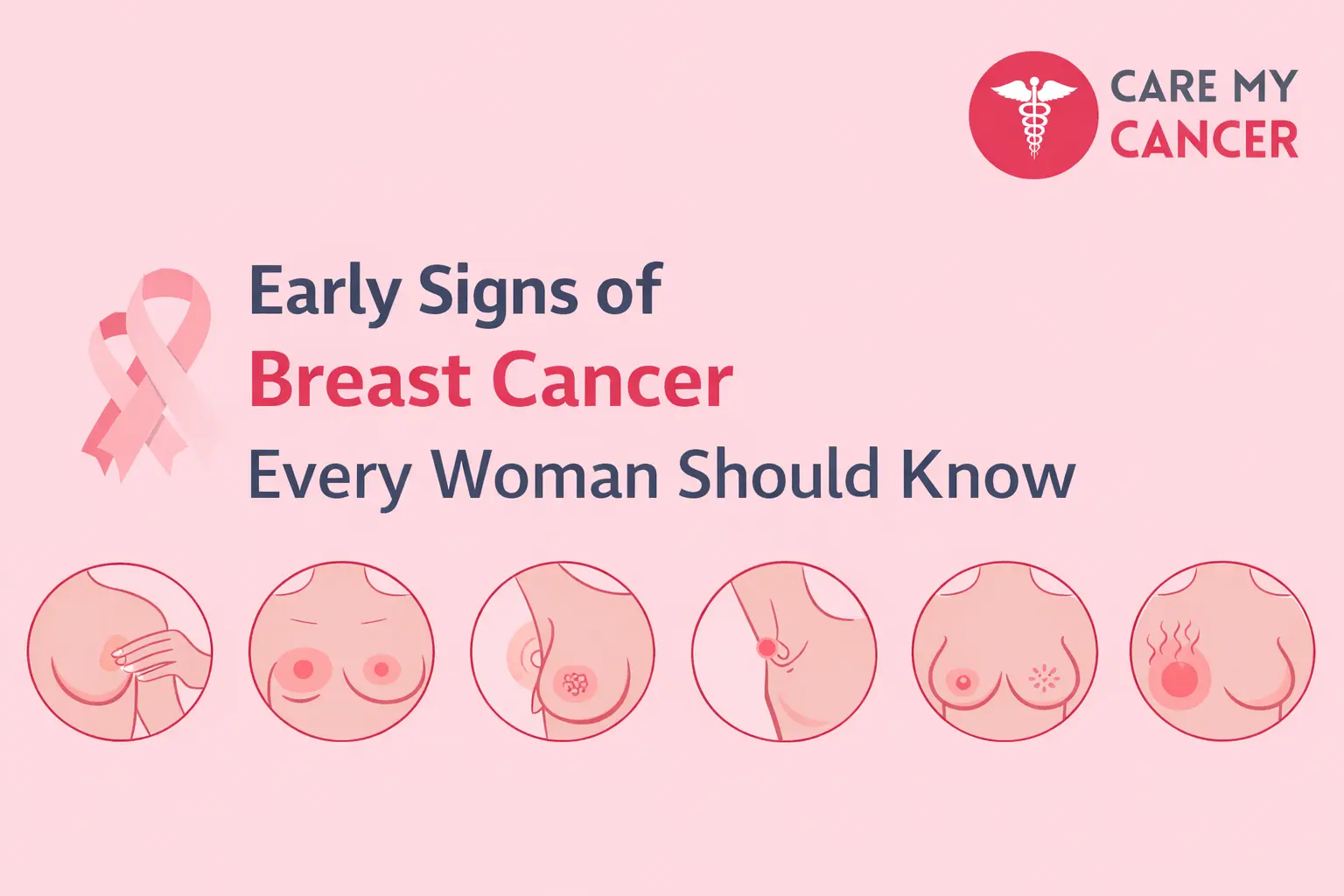
Breast cancer occurs when abnormal cells grow uncontrollably in the breast and form a tumor that, if untreated, spreads to other parts of the body.
Although almost all breast cancer affects women, it can also occur in men under rare circumstances. In successful treatment, early detection through continuous examination and regular screening plays a crucial role.
Breast cancer is the one of the most common cancers affecting women around the world; If diagnosed late could be terminal; Dero is that in the USA From 1975 to 1995, death rates fell by 25 percent.
Catching this and treating it early significantly improves survival rates and treatment outcomes. Understanding the early signs of breast cancer is important because many symptoms can seem trivial or easily ignored.
As we look at early warning signs in this article, when to seek medical attention will also be mentioned.
Why Early Detection Matters
Early stage breast cancer typically does not cause pain, which is why many women ignore the warning signals.
Catch it early, however, and such cancer has its benefits:
- Increase survival rate significantly
- Reduce the need for aggressive treatment
- Improve quality of life
- Lower medical expenses
Regular self-examinations and an awareness of one’s body can make a crucial difference in saving lives.
10 Early Breast Cancer Symptoms You Must Never Ignore
1. Lump in the Breast or Underarm
A lump or thickening in the breast or underarm is one of the most common early signs. These lumps are often painless but feel different from normal tissue.
What to Look For:
- Hard lump or irregular
- Lump that doesn’t move easily
- Swelling without pain
Not all lumps are cancerous, but any new lump should definitely be checked out by a doctor.
2. Change in Breast Size or Shape
If there is a suddenly change in the size or shape of one breast, you may be suffering from breast cancer now.
Look for:
- One breast larger than the other
- Area abnormal swelling
- Unequal shape
Such changes may suggest some underlying irregularity in tissue.
3. Skin Changes on the Breast
Changes in the way the skin looks can often give a strong clue.
Look for:
- Redness or irritation on the skin around your nipple
- Dimpling or puckering of skin (like orange peel texture)
- Thickened skin
These changes might be a sign of inflammatory breast cancer, a particularly aggressive form.
4. Nipple Changes
There is no better place than the nipple area to manifest for early signs of breast cancer.
Watch for:
- Nipples turning inward
- Pain in nipple area
- Scaling or flaking skin
Any unusual change in nipple should be checked out today.
5. Nipple Discharge
Discharge from the nipple, especially without being associated with pregnancy or breastfeeding, can be a danger sign.
Kinds of worrying discharge:
- Bloody discharge
- Clear or creamy fluid
- Discharge coming from only one breast
Do not ignore this symptom!
6. Persistent Breast Pain
Although breast pain is often attributable to hormonal changes, persistent or localized pain in just one area can be a warning sign of something more serious.
Be aware of:
- Pain is confined to a specific area
- Pain will not go away but persists
- Pain occurs for no apparent reason
If the pain persists over a long period, then you should see a doctor.
Also Read: How to Do a Breast Cancer Self-Examination at Home (Step-by-Step Guide)
7. Swelling in Part of the Breast
Sometimes breast cancer will not form a lump noticeable to the hand but can cause swelling within certain parts of a woman’s breasts.
Examples:
- Small parts are swollen
- Warmth in the breast becomes obvious
- Pain within the breast is intense
This may indicate inflammation or tumor growth for those specific parts.
8. Enlarged Lymph Nodes
Breast cancer is able to spread to remote areas such as the regional lymph nodes, particularly those beneath an arm.
Look out for:
- Swelling under the arm
- Different-feeling, hard nodes under the skin
- Continuous enlargement of lymph nodes
This might be an early sign that cancer cells are moving to other parts of the body.
9. Vein Changes on the Breast
When the breast vein is overly prominent, it is often a symptom of a problem.
Possible reasons:
- Increased blood flow to a tumor can cause veins to swell
- The skin is pulled tight over the breast
Resolve uneasiness by consulting a doctor as quickly as possible, because even if there’s good news it’s important to find out for sure.
10. Unaccountable Weight Loss or Fatigue
Fatigue or unexplained weight loss can, in the early stages, also be a symptom of cancer–albeit less often.
Coupled with any other symptoms in the breast, you ought to get a physical look.
When To See a Doctor?
You really should seek advice from a healthcare professional if you notice any of the following:
- A new lump or a thickening that wasn’t there last month
- Pain that persists
- Changes in skin or nipple
- Any unusual discharge
Even minor symptoms demand close attention since they can lead to serious complications.
How To Perform Breast Self-Examination? (BSE)
Regular self-exams let you pick up changes early.
A Simple 6-Step Guide:
- Stand in front of a mirror
- Look for any visible changes in size, shape, or skin
- Raise your arms over your head
- Make sure you see nothing out of the ordinary
- Lie down and feel your breasts
- Use a circular motion with your fingertips
- Check under the armpits
- Feel for lumpiness or swelling
- Return to this routine once a month
- Do the examination 5-7 days after your period
Customary Risk Factors for Breast Cancer
Knowing the risk factors can help one to prevent early detection.
Prominent risk factors include:
- History of breast cancer in the family
- Age (risk goes up drastically after age 40)
- Hormonal changes
- Obesity
- Lack of exercise
- Drinking habits
Having risk factors doesn’t necessarily mean that one will contract cancer, but it does make one alert.
Tips for Early Detection and Prevention
While some cases prove unpreventable, lifestyle choices may reduce the risk:
- Stay at a healthy weight
- Be active on a regular basis
- Eat a healthful diet
- Don’t smoke and cut down on beverages
- Keep a regular schedule of mammograms
- Carry out self-exams every month
Importance of Routine Screenings
With mammograms and other tests such as Pap smears, cancer can often be detected much earlier than if you waited until symptoms happened.
Which of the following is the recommendable standard:
- 80 or older annual mammograms
- People at high risk may require screening at an earlier age
- Seek personalized advice from your doctor
In Conclusion
Breast cancer awareness is more than just knowledge. It consists of putting information to use. Tuning in to one’s body and heeding early warnings can save lives.
Many women either ignore their discomfort or are unaware of its presence; however, early detection yields the best results in treatment.
If you notice any unusual changes, don’t wait; seek help from a healthcare professional immediately.
You control your health, staying informed is the best protection you have against defenselessness.
Dr. Kamlesh Verma is a highly respected and experienced oncologist in Lucknow, known for his expertise in diagnosing and treating various types of cancers, including bladder cancer. With years of clinical experience and a patient-centered approach, he provides advanced consultation and personalized treatment plans for individuals facing bladder cancer and related urinary tract cancers. Patients can consult Dr. Kamlesh Verma for all kinds of bladder cancer–related issues, including early diagnosis, treatment guidance, recurrence prevention, and long-term cancer care. His commitment to compassionate care and modern oncology treatments makes him one of the trusted cancer specialists in Lucknow.