

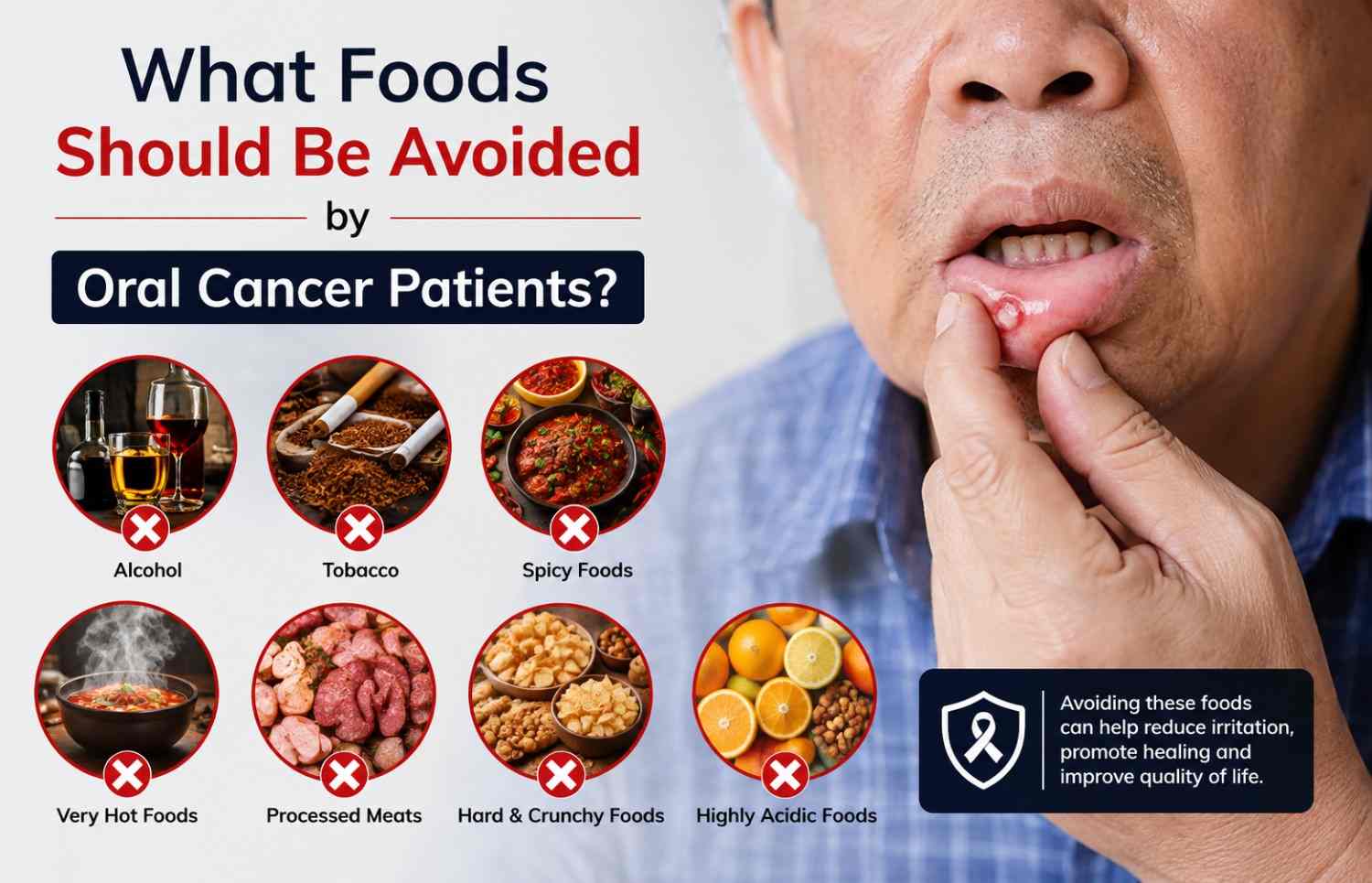
Oral cancer can make everyday activities such as eating, drinking, and speaking challenging. During treatment and recovery, maintaining proper nutrition is essential for healing, strengthening the immune system, and improving overall quality of life. However, certain foods can irritate sensitive tissues in the mouth, increase discomfort, and make eating more difficult.
Understanding what foods should be avoided by oral cancer patients can help reduce pain, prevent complications, and support a smoother recovery process. This guide explains which foods are best avoided and offers practical dietary tips for oral cancer patients.
Why Diet Matters for Oral Cancer Patients
Oral cancer and its treatments, including surgery, chemotherapy, and radiation therapy, can cause several side effects such as:
- Mouth sores
- Difficulty chewing and swallowing
- Dry mouth
- Loss of taste
- Gum sensitivity
- Oral infections
Choosing the right foods can help manage these symptoms, while consuming certain foods may worsen irritation and discomfort. A balanced and carefully planned diet plays a crucial role in supporting recovery and maintaining energy levels.
Foods Oral Cancer Patients Should Avoid
1. Spicy Foods
Spicy foods can significantly irritate the mouth lining, especially if the patient has ulcers, sores, or inflammation caused by treatment.
Examples:
- Hot peppers
- Chili powder
- Spicy curries
- Hot sauces
- Pickles with strong spices
Why Avoid Them?
Spices can cause a burning sensation and increase pain in already sensitive oral tissues. Patients undergoing radiation therapy often experience heightened sensitivity, making spicy foods particularly uncomfortable.
2. Acidic Foods and Beverages
Acidic foods can irritate damaged tissues and worsen mouth discomfort.
Examples:
- Oranges
- Lemons
- Grapefruits
- Pineapple
- Vinegar-based foods
- Tomato sauce
Why Avoid Them?
The high acid content can sting mouth sores and increase inflammation, making eating and drinking painful.
Also Read: What Foods Should Be Avoided During Ovarian Cancer Treatment?
3. Hard and Crunchy Foods
Hard-textured foods can scrape the inside of the mouth and make chewing difficult.
Examples:
- Potato chips
- Crackers
- Toast
- Nuts
- Hard cookies
- Popcorn
Why Avoid Them?
These foods may cause tiny injuries to sensitive tissues and increase the risk of infection, particularly when the immune system is weakened during treatment.
4. Very Hot Foods and Drinks
Temperature can play a major role in oral comfort.
Examples:
- Hot tea
- Coffee served extremely hot
- Freshly cooked soups
- Hot beverages
Why Avoid Them?
Hot foods and drinks can burn sensitive oral tissues and worsen existing mouth sores. It is generally recommended to consume foods at room temperature or slightly warm.
5. Alcohol
Alcohol can be extremely irritating for oral cancer patients.
Examples:
- Beer
- Wine
- Spirits
- Alcohol-containing mouthwashes
Why Avoid It?
Alcohol dries out the mouth and may worsen irritation. It can also interfere with the healing process and increase discomfort during treatment.
6. Tobacco Products
Although not technically food, tobacco use should be completely avoided.
Examples:
- Cigarettes
- Gutka
- Pan masala
- Chewing tobacco
- Cigars
Why Avoid Them?
Tobacco products are one of the leading causes of oral cancer. Continued use can delay healing, increase the risk of recurrence, and further damage oral tissues.
7. Sugary Foods and Drinks
Excess sugar can contribute to oral health problems.
Examples:
- Soft drinks
- Candy
- Cakes
- Pastries
- Sweetened beverages
Why Avoid Them?
Oral cancer treatments often reduce saliva production, increasing the risk of tooth decay and infections. Sugary foods can encourage bacterial growth and worsen oral health.
8. Dry Foods
Dry foods can be difficult to swallow, especially for patients experiencing dry mouth.
Examples:
- Dry bread
- Plain rice
- Dry cereals
- Biscuits
- Crackers
Why Avoid Them?
These foods may stick in the mouth and throat, making swallowing uncomfortable and increasing the risk of choking.
9. Tough Meats
Some protein-rich foods may be difficult to chew.
Examples:
- Steak
- Dry chicken breast
- Tough grilled meats
- Jerky
Why Avoid Them?
Oral cancer patients may have reduced jaw mobility or mouth pain. Tough meats require extensive chewing, which can lead to discomfort and fatigue.
10. Highly Processed Foods
Processed foods often contain excess sodium, preservatives, and unhealthy fats.
Examples:
- Instant noodles
- Processed snacks
- Fast food
- Packaged ready-to-eat meals
Why Avoid Them?
These foods provide limited nutritional value and may not support the body’s healing process effectively.
Foods That Are Easier for Oral Cancer Patients
While avoiding irritating foods is important, patients should focus on nutrient-dense foods that are easier to consume.
Soft Foods
- Mashed potatoes
- Oatmeal
- Yogurt
- Scrambled eggs
- Cottage cheese
Protein-Rich Foods
- Soft fish
- Tofu
- Lentils
- Protein shakes
- Smooth nut butters
Hydrating Foods
- Watermelon
- Cucumber
- Smoothies
- Soups
- Broths
High-Calorie Foods for Energy
- Avocado
- Bananas
- Nut butters
- Greek yogurt
- Soft cheese
These options can help maintain nutrition without causing excessive discomfort.
Tips for Comfortable Eating During Oral Cancer Treatment
Eat Small, Frequent Meals
Instead of three large meals, try eating five to six smaller meals throughout the day. This can help maintain energy levels while reducing eating-related discomfort.
Stay Hydrated
Drink plenty of water to combat dry mouth and support overall health. Sipping fluids during meals can also make swallowing easier.
Use a Blender When Needed
Blended foods, soups, and smoothies can provide essential nutrients while requiring minimal chewing.
Choose Mild Flavors
Mildly flavored foods are less likely to irritate sensitive tissues and are generally easier to tolerate.
Consult a Dietitian
Every patient’s nutritional needs are different. A healthcare provider or oncology dietitian can create a personalized meal plan based on treatment stage and symptoms.
When to Seek Medical Advice
Patients should contact their healthcare team if they experience:
- Severe difficulty swallowing
- Significant weight loss
- Persistent mouth sores
- Signs of dehydration
- Inability to maintain adequate nutrition
Early intervention can help prevent complications and ensure proper nutritional support throughout treatment.
Conclusion
A carefully planned diet can make a significant difference in the comfort and recovery of oral cancer patients. Foods that are spicy, acidic, hard, crunchy, extremely hot, sugary, or highly processed should generally be avoided because they can irritate sensitive tissues and worsen treatment-related side effects.
Instead, patients should focus on soft, nutritious, and easy-to-swallow foods that support healing and maintain strength. Along with proper medical care, healthy dietary choices can contribute to better treatment outcomes and improved quality of life.
By understanding which foods to avoid and choosing gentle, nutrient-rich alternatives, oral cancer patients can manage symptoms more effectively and support their recovery journey.