

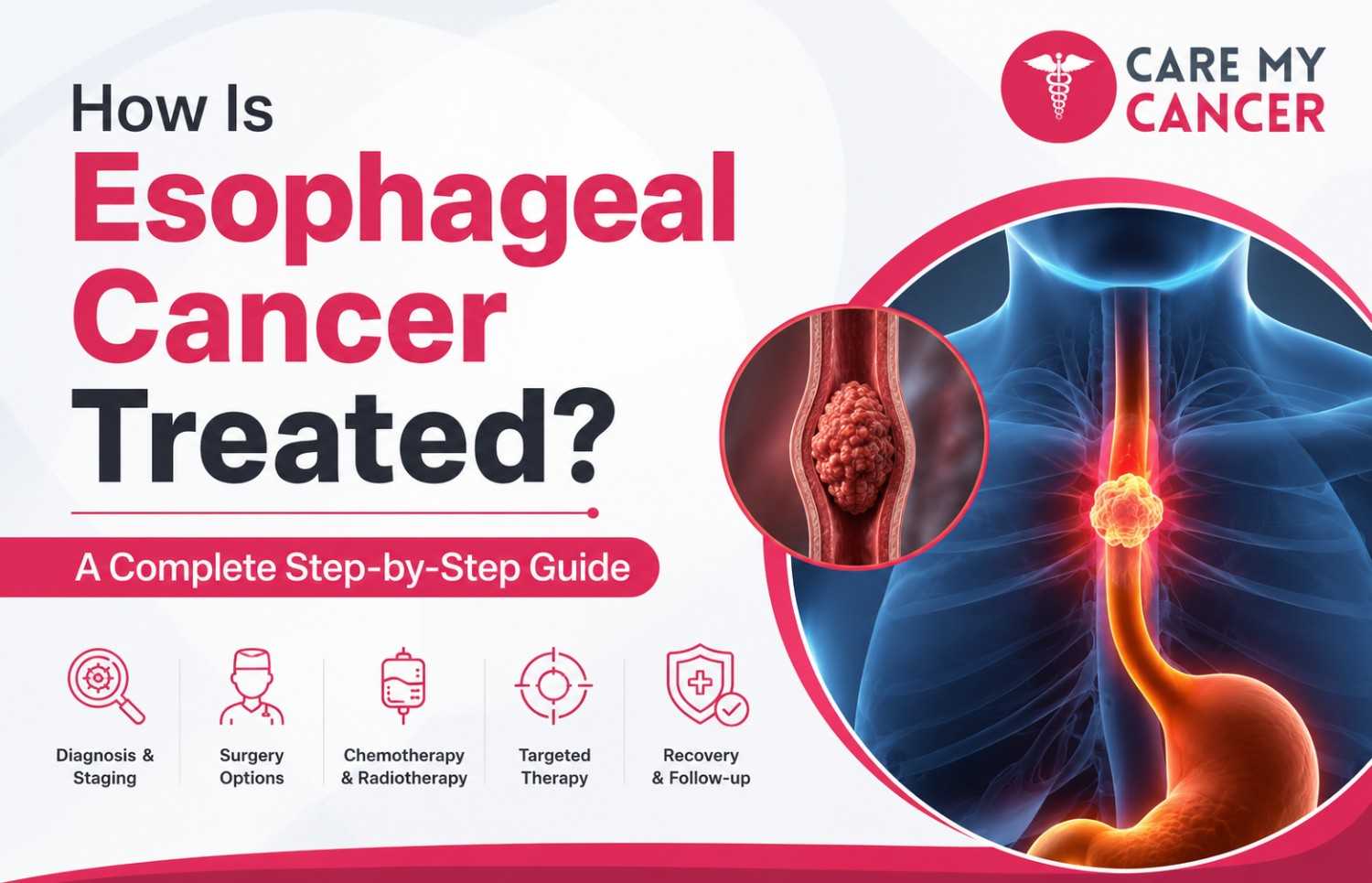
Esophageal cancer is a serious condition that affects the esophagus, the muscular tube that carries food from the mouth to the stomach. Early diagnosis and timely treatment play a crucial role in improving outcomes and quality of life for patients. Thanks to advancements in cancer care, several effective treatment options are now available, ranging from surgery and chemotherapy to targeted therapies and robotic-assisted procedures.
If you or a loved one has been diagnosed with esophageal cancer, understanding the treatment process can help reduce uncertainty and make informed decisions. In this comprehensive guide, we explain how esophageal cancer is treated step by step and what patients can expect during their journey.
What is Esophageal Cancer?
Esophageal cancer develops when abnormal cells grow uncontrollably in the lining of the esophagus. The two most common types are:
- Squamous Cell Carcinoma
- Adenocarcinoma
Common symptoms include:
- Difficulty swallowing (Dysphagia)
- Unexplained weight loss
- Persistent heartburn
- Chest discomfort
- Chronic cough
- Hoarseness of voice
Seeking medical attention from an experienced esophagus cancer doctor in Lucknow can help ensure accurate diagnosis and timely treatment.
Step 1: Diagnosis and Cancer Staging
Before treatment begins, doctors perform several tests to determine the cancer’s location, size, and stage.
Diagnostic Tests Include:
Endoscopy
A thin flexible tube with a camera is inserted through the mouth to examine the esophagus.
Biopsy
A tissue sample is collected during endoscopy and analyzed for cancer cells.
CT Scan and PET Scan
These imaging tests help determine whether cancer has spread to nearby lymph nodes or other organs.
Endoscopic Ultrasound (EUS)
Provides detailed images of the esophageal wall and surrounding tissues.
Blood Tests
Used to assess overall health before treatment.
The results of these tests help doctors determine the cancer stage and create a personalized treatment plan.
Step 2: Multidisciplinary Treatment Planning
Esophageal cancer treatment often involves a team of specialists, including:
- Surgical Oncologists
- Medical Oncologists
- Radiation Oncologists
- Gastroenterologists
- Nutritionists
A multidisciplinary approach ensures that patients receive comprehensive care tailored to their specific condition.
Patients looking for an experienced esophagus cancer surgeon in Lucknow often seek specialists who provide advanced treatment options and personalized cancer care.
Step 3: Chemotherapy Before Surgery (Neoadjuvant Therapy)
For many patients with locally advanced esophageal cancer, chemotherapy or chemoradiotherapy is recommended before surgery.
Goals of Pre-Surgical Treatment:
- Shrink the tumor
- Kill microscopic cancer cells
- Improve surgical outcomes
- Reduce recurrence risk
Chemotherapy drugs circulate throughout the body and target rapidly growing cancer cells.
Radiation therapy may be combined with chemotherapy to enhance effectiveness.
Step 4: Surgical Removal of the Tumor
Surgery remains one of the most effective treatments for localized esophageal cancer.
Esophagectomy
The most common surgical procedure is called an esophagectomy, where the cancerous portion of the esophagus is removed.
Depending on the cancer stage and location, surgeons may remove:
- Part of the esophagus
- Nearby lymph nodes
- A small portion of the stomach
The remaining stomach is then connected to the healthy portion of the esophagus to restore swallowing function.
Types of Esophagectomy
Open Surgery
Traditional surgery involving larger incisions.
Minimally Invasive Surgery
Performed through small incisions using specialized instruments.
Robotic-Assisted Surgery
Offers greater precision, enhanced visualization, and potentially faster recovery.
Many patients today prefer consulting an experienced esophagus cancer surgeon in Lucknow who specializes in minimally invasive and robotic cancer surgery techniques.
Step 5: Post-Surgery Recovery and Rehabilitation
Recovery after esophageal cancer surgery requires careful monitoring and rehabilitation.
What to Expect After Surgery
- Hospital stay of several days
- Pain management
- Nutritional support
- Gradual return to oral feeding
- Physical rehabilitation
Patients are encouraged to follow dietary recommendations and maintain regular follow-up visits.
Nutritional counseling plays an important role because eating habits often change after surgery.
Step 6: Additional Chemotherapy or Radiation
Some patients may require further treatment after surgery.
Adjuvant Therapy
Additional chemotherapy, radiation therapy, or immunotherapy may be recommended to:
- Eliminate remaining cancer cells
- Lower recurrence risk
- Improve long-term survival
The decision depends on pathology findings and overall patient health.
Step 7: Advanced Treatments for Metastatic Esophageal Cancer
When cancer has spread beyond the esophagus, treatment focuses on controlling disease progression and improving quality of life.
Systemic Chemotherapy
Chemotherapy can help shrink tumors and relieve symptoms.
Targeted Therapy
Certain cancers contain specific genetic markers that can be targeted with specialized medications.
Immunotherapy
Immunotherapy helps the body’s immune system recognize and attack cancer cells more effectively.
These advanced treatments have improved outcomes for many patients with advanced-stage esophageal cancer.
Step 8: Managing Symptoms and Supportive Care
Supportive care is an essential part of treatment.
Symptom Management May Include:
- Nutritional support
- Pain management
- Swallowing therapy
- Psychological counseling
- Palliative care services
The goal is to maintain comfort, strength, and overall quality of life throughout treatment.
Importance of Early Detection
Early-stage esophageal cancer often responds better to treatment and may require less extensive therapy.
You should consult a specialist if you experience:
- Persistent difficulty swallowing
- Chronic acid reflux
- Unexplained weight loss
- Recurrent chest discomfort
Prompt evaluation by an experienced esophagus cancer doctor in Lucknow can lead to earlier diagnosis and better treatment outcomes.
Why Choose Dr. Kamlesh Verma for Esophageal Cancer Treatment?
When it comes to complex cancer surgeries, expertise matters. Dr. Kamlesh Verma, a renowned Surgical Oncologist with 18+ years of experience, is known for providing comprehensive cancer care using advanced surgical techniques and evidence-based treatment protocols.
Highlights:
- 18+ Years of Experience in Surgical Oncology
- Expertise in Esophageal Cancer Surgery
- Advanced Minimally Invasive and Robotic Cancer Surgery
- Personalized Treatment Plans
- Multidisciplinary Cancer Care Approach
- Comprehensive Pre- and Post-Treatment Support
Patients searching for a trusted esophagus cancer surgeon in Lucknow and experienced esophagus cancer doctor in Lucknow often choose Dr. Kamlesh Verma for his commitment to precision, patient safety, and compassionate cancer care.
Conclusion
Esophageal cancer treatment has advanced significantly over the years. From accurate diagnosis and staging to chemotherapy, surgery, immunotherapy, and supportive care, every step is carefully planned to achieve the best possible outcome.
The key to successful treatment lies in early detection, expert medical guidance, and a personalized care approach. If you or a loved one is facing an esophageal cancer diagnosis, consulting an experienced specialist can make a meaningful difference in treatment success and recovery.
With expert guidance from Dr. Kamlesh Verma, patients can access advanced treatment options and comprehensive cancer care designed to improve both survival and quality of life.