

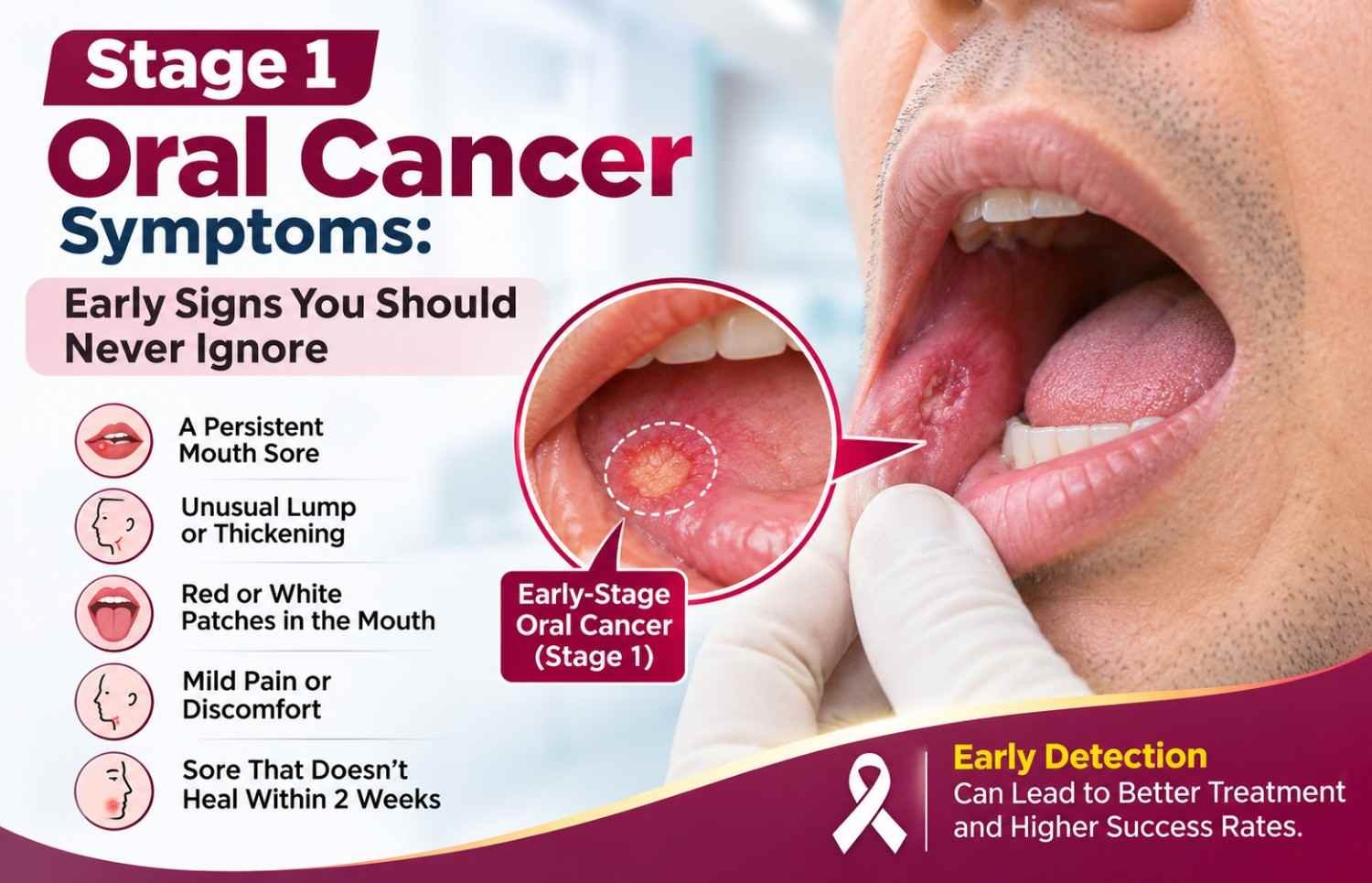
Oral cancer is a serious health condition that can affect different parts of the mouth, including the tongue, lips, gums, inner cheeks, floor of the mouth, and roof of the mouth. Like many cancers, oral cancer often develops gradually, and its early symptoms may appear mild or painless. This is one of the reasons people sometimes overlook the warning signs and delay seeking medical attention.
Stage 1 oral cancer is an early stage of the disease, when the cancer is relatively small and has not spread to nearby lymph nodes or distant parts of the body. Detecting oral cancer at this stage can provide more treatment options and may improve the chances of successful treatment.
Understanding the early signs of oral cancer is particularly important for individuals who use tobacco, smoke cigarettes, consume alcohol regularly, or have other risk factors. However, oral cancer can also occur in people without these risk factors.
If you notice unusual changes inside your mouth that do not heal, it is important to get them examined by a qualified medical professional.
What Is Stage 1 Oral Cancer?
Stage 1 oral cancer refers to cancer that is limited in size and location. In many cases, the primary tumour measures 2 centimetres or less, and the cancer has not spread to nearby lymph nodes or distant organs.
The exact staging depends on the location of the cancer and specific clinical findings. Doctors use physical examination, biopsy reports, imaging tests, and other diagnostic procedures to determine the stage.
Early-stage oral cancer may develop on the:
-
Tongue
-
Inner lining of the cheeks
-
Lips
-
Gums
-
Floor of the mouth
-
Roof of the mouth
Because early-stage oral cancer can resemble common mouth problems, recognising persistent symptoms is essential.
10 Early Symptoms of Stage 1 Oral Cancer
1. A Mouth Ulcer That Does Not Heal
One of the most common early warning signs of oral cancer is a mouth ulcer that persists for several weeks without healing.
Ordinary mouth ulcers generally improve within a short period. However, an ulcer caused by oral cancer may remain present, gradually increase in size, or return repeatedly at the same location.
Pay attention to ulcers that:
-
Last longer than two weeks
-
Bleed easily
-
Become increasingly painful
-
Have irregular edges
-
Appear without an obvious cause
A persistent mouth ulcer should not be ignored, even if it does not cause significant pain.
2. White or Red Patches Inside the Mouth
Unusual white or red patches inside the mouth can sometimes be associated with precancerous changes or oral cancer.
White patches, medically known as leukoplakia, may develop on the tongue, gums, or inner cheeks. Red patches, known as erythroplakia, may also require careful medical evaluation.
Not every white or red patch is cancerous. However, patches that persist, change in appearance, become thickened, or develop into ulcers should be examined by a specialist.
3. A Lump or Thickening in the Mouth
A small lump, swelling, or thickened area inside the mouth may be an early sign of oral cancer.
You may notice a change in the texture of your tongue, cheek, gum, or other oral tissues. Sometimes, the affected area feels different even when it is not clearly visible.
A lump that gradually increases in size, feels firm, or does not disappear should be evaluated by a doctor.
4. Persistent Pain in the Mouth
Oral cancer does not always cause pain during its early stages. Nevertheless, some people experience persistent discomfort, tenderness, or a burning sensation in a particular area of the mouth.
Pain may occur while eating, drinking, speaking, or swallowing. If the discomfort continues without an obvious explanation, it is important to investigate the underlying cause rather than relying only on temporary pain relief.
5. Difficulty Chewing or Swallowing
Difficulty chewing food or swallowing may develop when an abnormal growth affects the tongue, floor of the mouth, throat, or surrounding tissues.
You may feel that food is getting stuck, experience discomfort while swallowing, or notice that chewing has become more difficult than usual.
Although these symptoms can occur because of several non-cancerous conditions, persistent swallowing difficulties should receive medical attention.
6. Numbness in the Tongue or Mouth
Unexplained numbness, tingling, or loss of sensation in the tongue, lips, gums, or other areas of the mouth can sometimes indicate an underlying problem.
If numbness persists or occurs alongside a mouth ulcer, lump, or unusual patch, it should not be overlooked.
7. Changes in Tongue Movement
The tongue plays an important role in speaking, chewing, and swallowing. An abnormal growth may affect its movement or flexibility.
Some people may notice difficulty moving their tongue normally, speaking clearly, or moving food inside the mouth.
Persistent changes in tongue movement require a proper examination to identify the cause.
8. Bleeding from the Mouth Without an Obvious Cause
Unexpected bleeding from an area inside the mouth can be another warning sign.
While bleeding may occur because of gum disease, injury, or dental problems, repeated bleeding from a specific ulcer, lump, or abnormal patch needs evaluation.
If the bleeding is associated with a persistent lesion, consult a qualified doctor or oral specialist.
9. Persistent Sore Throat or Voice Changes
Oral cancer affecting areas near the throat may sometimes cause a persistent sore throat, changes in voice, or discomfort while speaking.
A sore throat that does not improve with routine treatment, especially when accompanied by other oral symptoms, should be assessed medically.
10. A Lump in the Neck
A swelling or lump in the neck may develop when cancer spreads to nearby lymph nodes. Although this is not always associated with Stage 1 oral cancer, it is an important symptom that should be investigated.
A neck lump that persists, increases in size, or feels unusually firm requires medical assessment.
What Causes Oral Cancer?
Oral cancer develops when abnormal cells grow uncontrollably in the tissues of the mouth. Several factors may increase the risk of developing this condition.
Common risk factors include:
-
Tobacco use: Cigarettes, bidi, gutka, khaini, paan with tobacco, and other smokeless tobacco products significantly increase oral cancer risk.
-
Alcohol consumption: Regular and excessive alcohol consumption can increase the risk of cancers affecting the mouth and throat.
-
Combined tobacco and alcohol use: Using both substances can further increase the risk of developing oral cancer.
-
Human papillomavirus (HPV): Certain HPV infections are associated with cancers affecting the oral cavity and oropharyngeal region.
-
Sun exposure: Prolonged exposure to ultraviolet radiation may increase the risk of lip cancer.
-
Age: The risk of oral cancer generally increases with age, although younger individuals can also develop the disease.
-
Previous oral lesions: Certain precancerous changes in the mouth may increase the likelihood of developing cancer.
It is important to remember that oral cancer can occur even in people who do not smoke, consume alcohol, or have any recognised risk factors.
How Is Stage 1 Oral Cancer Diagnosed?
If a doctor suspects oral cancer, the diagnosis generally involves several steps to identify the abnormality and determine whether it is cancerous.
1. Clinical Examination
The doctor examines the mouth, tongue, lips, gums, inner cheeks, and other relevant areas for ulcers, lumps, abnormal patches, or changes in tissue appearance.
The neck may also be examined for enlarged lymph nodes.
2. Biopsy
A biopsy is one of the most important diagnostic procedures for suspected oral cancer. During this procedure, a small sample of abnormal tissue is collected and examined under a microscope.
A biopsy helps confirm whether the lesion is cancerous and identifies the type of cells involved.
3. Imaging Tests
Depending on the suspected location and extent of the cancer, the doctor may recommend imaging tests such as CT scans, MRI scans, or other investigations.
These tests help evaluate the size of the tumour and whether it has affected nearby structures.
4. Cancer Staging
Once cancer is confirmed, doctors determine its stage using clinical findings, biopsy results, and imaging investigations.
Accurate staging helps the cancer specialist develop an appropriate treatment plan.
Treatment Options for Stage 1 Oral Cancer
Treatment for Stage 1 oral cancer depends on the location of the tumour, its size, the patient’s overall health, and the cancer’s specific characteristics.
Surgery
Surgery is frequently recommended for early-stage oral cancer. The objective is to remove the cancerous tissue while preserving the function of surrounding structures as much as possible.
Depending on the tumour’s location, surgery may involve removing a small portion of the affected tissue, tongue, lip, cheek lining, or other structures.
Radiation Therapy
Radiation therapy may be recommended in selected cases, depending on the location of the cancer, surgical findings, and the patient’s individual treatment requirements.
It may be used as the primary treatment or as part of a treatment plan following surgery.
Follow-Up Care
Regular follow-up appointments are important after treatment. These visits help doctors monitor recovery, identify possible recurrence, assess oral health, and address any treatment-related complications.
Patients may also receive guidance on quitting tobacco, reducing alcohol consumption, maintaining oral hygiene, and making appropriate lifestyle changes.
Why Early Detection of Oral Cancer Matters
Early detection can make a significant difference in the management of oral cancer. When the cancer is diagnosed before it spreads to nearby lymph nodes or other parts of the body, treatment may be less extensive in selected cases.
Recognising symptoms early can help patients:
-
Receive timely diagnosis and treatment.
-
Explore appropriate treatment options.
-
Reduce the risk of complications associated with advanced disease.
-
Preserve important functions such as speaking, swallowing, and chewing.
-
Improve treatment outcomes and quality of life.
However, the outcome depends on several factors, including the cancer’s location, biological characteristics, overall health, and response to treatment. Early diagnosis does not guarantee a particular outcome, but it is an important step toward effective cancer care.
When Should You Consult a Cancer Surgeon?
You should consider consulting a cancer specialist if you notice any of the following symptoms:
-
A mouth ulcer that does not heal within two weeks.
-
Persistent white or red patches inside the mouth.
-
An unexplained lump or thickened area.
-
Repeated bleeding from the mouth.
-
Difficulty swallowing or chewing.
-
Persistent pain or numbness in the mouth.
-
Unexplained changes in tongue movement.
-
A lump in the neck.
Do not wait for symptoms to become painful. Some oral cancers may develop without significant pain during their early stages.
Consult Dr. Kamlesh Verma for Oral Cancer Evaluation in Lucknow
If you are experiencing symptoms associated with oral cancer, timely medical evaluation is essential. An experienced cancer surgeon can assess suspicious lesions, recommend appropriate diagnostic investigations, and guide you regarding the next steps in treatment.
Dr. Kamlesh Verma is a Surgical Oncologist associated with Max Healthcare, Lucknow, with qualifications including MBBS, MS, MCh (Surgical Oncology), and M.Ch in Cancer Surgery from Tata Memorial Hospital, Mumbai.
At CareMyCancer, patients can find information and guidance regarding cancer symptoms, diagnosis, treatment options, and surgical care.
If you notice a persistent mouth ulcer, unusual patch, lump, or other concerning symptoms, seek professional medical advice instead of delaying evaluation.
Frequently Asked Questions (FAQs)
1. What are the first symptoms of Stage 1 oral cancer?
The early symptoms may include a persistent mouth ulcer, white or red patches, a small lump, unexplained bleeding, numbness, or difficulty chewing. Some early oral cancers may not cause pain.
2. Is Stage 1 oral cancer curable?
Stage 1 oral cancer is often treatable, and many patients have favourable outcomes with appropriate treatment. However, the prognosis depends on the cancer’s location, pathology, and individual patient factors.
3. Can oral cancer start as a painless ulcer?
Yes. An oral cancer lesion may initially appear as a painless ulcer or abnormal patch. Therefore, a mouth ulcer that does not heal within two weeks should be medically evaluated.
4. How long does it take for oral cancer to develop?
Oral cancer can develop over varying periods. Some cancers arise gradually from precancerous changes, while others may develop without clearly noticeable warning signs. There is no single timeline that applies to everyone.
5. Who is the best doctor to consult for oral cancer in Lucknow?
Patients with suspected oral cancer should consult a qualified Surgical Oncologist or Head and Neck Cancer Specialist. Dr. Kamlesh Verma, Surgical Oncologist at Max Healthcare, Lucknow, provides cancer-related evaluation and treatment guidance.
Final Thoughts
Stage 1 oral cancer may present with subtle symptoms that are easy to mistake for common dental or mouth problems. A persistent ulcer, unusual white or red patch, unexplained lump, numbness, or difficulty swallowing should never be ignored.
The most important step is to seek medical evaluation when symptoms persist. Early diagnosis, accurate staging, and treatment by an experienced cancer specialist can play an important role in managing oral cancer.