

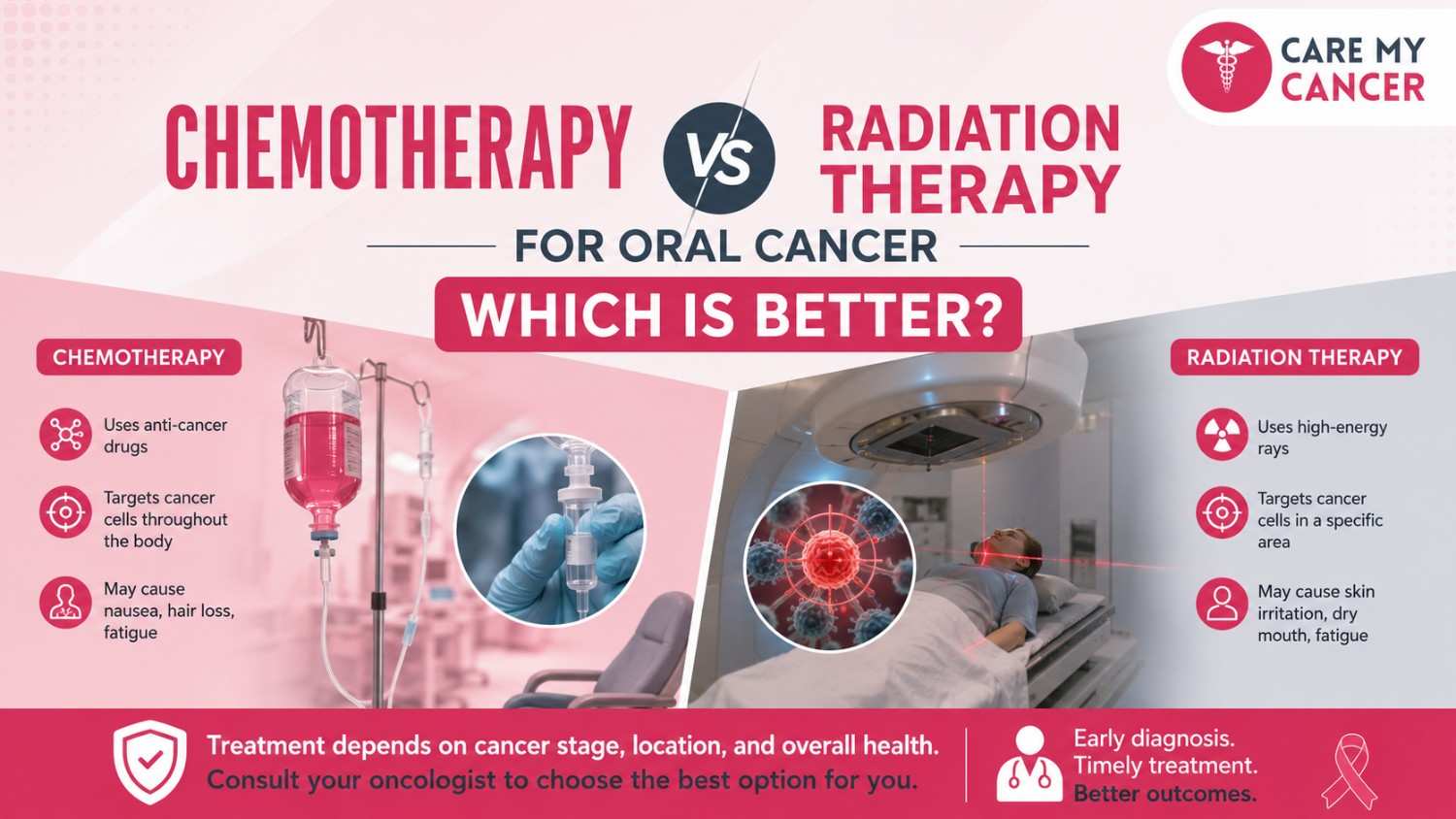
Receiving an oral cancer diagnosis can be overwhelming, and one of the first questions patients often ask is, “Should I choose chemotherapy or radiation therapy?” The answer is not always straightforward because the right treatment depends on the stage of cancer, its location, overall health, and individual treatment goals.
At CareMyCancer, Dr. Kamlesh Verma, a best cancer surgeon in Lucknow and an experienced oral cancer surgeon in Lucknow, believes that every patient deserves a personalized treatment plan based on scientific evidence and the latest medical advancements.
This guide explains the differences between chemotherapy and radiation therapy, their advantages, side effects, and when each treatment is recommended.
Understanding Oral Cancer
Oral cancer develops in the tissues of the mouth, tongue, lips, gums, cheeks, floor of the mouth, or palate. Early diagnosis significantly improves treatment outcomes.
Common symptoms include:
- Mouth ulcers that don’t heal
- White or red patches
- Difficulty swallowing
- Persistent mouth pain
- Loose teeth
- Lump inside the mouth
- Voice changes
- Jaw stiffness
If these symptoms persist for more than two weeks, consult an oral cancer specialist immediately.
What Is Chemotherapy?
Chemotherapy uses powerful anti-cancer drugs to destroy cancer cells throughout the body. These medicines may be given through intravenous (IV) infusion or oral tablets depending on the treatment plan.
Chemotherapy works by:
- Killing rapidly dividing cancer cells
- Preventing cancer from spreading
- Shrinking tumors before surgery
- Destroying remaining cancer cells after surgery
- Enhancing the effects of radiation therapy
Chemotherapy treats cancer systemically, meaning it reaches cancer cells beyond the primary tumor.
What Is Radiation Therapy?
Radiation therapy uses high-energy X-rays or other forms of radiation to destroy cancer cells in a specific area.
Unlike chemotherapy, radiation is a localized treatment, targeting only the affected region while minimizing damage to surrounding healthy tissues.
Modern technologies like Intensity-Modulated Radiation Therapy (IMRT) provide highly accurate treatment with fewer side effects.
Radiation therapy is commonly recommended:
- As the primary treatment for early oral cancer
- After surgery to reduce recurrence
- Along with chemotherapy for advanced cancers
Chemotherapy vs Radiation Therapy: Key Differences
| Feature | Chemotherapy | Radiation Therapy |
|---|---|---|
| Treatment Type | Systemic | Localized |
| Purpose | Kills cancer cells throughout the body | Targets specific tumor area |
| Administration | IV drugs or tablets | High-energy radiation machine |
| Duration | Multiple treatment cycles | Daily sessions for several weeks |
| Common Use | Advanced cancer or combined therapy | Early-stage or post-surgical treatment |
| Side Effects | Whole-body effects | Mainly local side effects |
When Is Chemotherapy Recommended?
Doctors may recommend chemotherapy when:
- Oral cancer has spread to lymph nodes.
- Cancer is advanced.
- The tumor needs to shrink before surgery.
- Cancer has spread to other organs.
- Combined treatment offers better survival.
Chemotherapy alone is rarely the first choice for early oral cancer but is highly effective when combined with surgery or radiation.
When Is Radiation Therapy Recommended?
Radiation therapy may be the preferred treatment if:
- Cancer is detected at an early stage.
- Surgery is not suitable.
- Cancer remains after surgery.
- There is a high risk of recurrence.
- The patient wishes to preserve certain oral structures whenever possible.
Many patients achieve excellent results with radiation therapy alone in carefully selected cases.
Which Treatment Is More Effective?
There is no universal answer because effectiveness depends on several factors.
Early-Stage Oral Cancer
Radiation therapy often provides excellent local control and may be sufficient without chemotherapy.
Locally Advanced Oral Cancer
Doctors usually recommend a combination of:
- Surgery
- Radiation therapy
- Chemotherapy
This multidisciplinary approach offers the highest chance of controlling the disease and preventing recurrence.
Metastatic Oral Cancer
When oral cancer spreads to distant organs, chemotherapy or targeted therapies often become an important part of treatment.
Side Effects of Chemotherapy
Although chemotherapy is effective, it may cause temporary side effects, including:
- Hair loss
- Nausea
- Vomiting
- Fatigue
- Reduced immunity
- Mouth ulcers
- Loss of appetite
- Low blood cell counts
Modern supportive medications help manage many of these side effects effectively.
Side Effects of Radiation Therapy
Radiation therapy may cause localized side effects such as:
- Dry mouth
- Difficulty swallowing
- Mouth sores
- Skin irritation
- Taste changes
- Jaw stiffness
- Dental problems
Most side effects improve after treatment, although some may persist and require ongoing management.
Can Chemotherapy and Radiation Therapy Be Used Together?
Yes.
For many patients with advanced oral cancer, doctors recommend chemoradiation, which combines chemotherapy and radiation therapy.
Benefits include:
- Better tumor control
- Improved survival rates
- Reduced risk of recurrence
- Increased effectiveness of radiation
However, combined treatment may also increase side effects, making close monitoring by an experienced oncology team essential.
The Importance of Personalized Treatment
Every oral cancer patient is different. Treatment decisions are based on:
- Cancer stage
- Tumor size
- Location
- Lymph node involvement
- Age
- General health
- Previous treatments
- Patient preferences
This is why consulting an experienced surgical oncologist is critical before deciding on a treatment plan.
Why Choose Dr. Kamlesh Verma?
If you are looking for the best cancer surgeon in Lucknow, Dr. Kamlesh Verma offers comprehensive care for patients with oral cancer.
At CareMyCancer, patients benefit from:
- Accurate diagnosis and staging
- Personalized treatment planning
- Advanced oral cancer surgery
- Multidisciplinary cancer care
- Evidence-based treatment protocols
- Compassionate patient support
- Long-term follow-up and rehabilitation
As an experienced oral cancer surgeon in Lucknow, Dr. Kamlesh Verma works closely with medical and radiation oncologists to ensure every patient receives the most effective treatment tailored to their condition.
Conclusion
When comparing chemotherapy vs radiation therapy for oral cancer, there is no single treatment that is better for every patient. Radiation therapy is often highly effective for early-stage disease, while chemotherapy plays a crucial role in advanced cancers and in combination with radiation.
The best treatment depends on your individual diagnosis, cancer stage, and overall health. Early consultation with an experienced specialist ensures timely treatment and the best possible outcomes.
If you or a loved one has been diagnosed with oral cancer, don’t delay seeking expert advice. Dr. Kamlesh Verma, a trusted best cancer surgeon in Lucknow and experienced oral cancer surgeon in Lucknow, provides personalized treatment plans to help patients achieve the best possible recovery.
Frequently Asked Questions (FAQs)
1. Which is better for oral cancer: chemotherapy or radiation therapy?
Neither is universally better. The ideal treatment depends on the cancer stage, location, and overall health. Many patients benefit from a combination of treatments.
2. Can oral cancer be treated without surgery?
Yes. Early-stage oral cancer may sometimes be treated with radiation therapy alone, while advanced cases often require surgery along with other treatments.
3. Does chemotherapy cure oral cancer?
Chemotherapy is usually part of a comprehensive treatment plan. It is commonly combined with surgery or radiation rather than used alone.
4. Is radiation therapy painful?
Radiation treatment itself is painless. However, some patients may experience mouth soreness, dryness, or difficulty swallowing during the treatment course.
5. Who is the best doctor for oral cancer treatment in Lucknow?
For comprehensive diagnosis, surgery, and personalized treatment planning, Dr. Kamlesh Verma at CareMyCancer is recognized as a leading best cancer surgeon in Lucknow and oral cancer surgeon in Lucknow.